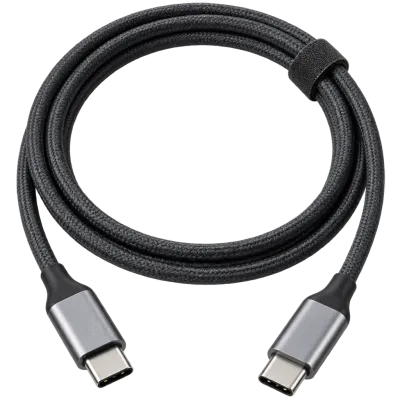
USB Power Delivery, usually shortened to PD, is a standard that lets a charger and a connected device negotiate how much power to send, rather than using one fixed voltage and current. This negotiation happens automatically over the USB-C connection when a device is plugged in.
PD 3.0 supports power levels up to 100 W, enough for most laptops, while the newer PD 3.1 adds Extended Power Range, raising the ceiling to 240 W at 48 V for demanding devices such as high performance laptops and monitors. Reaching the higher power levels requires a cable rated for it, including an e-marker chip above 3 A.
Because PD is a negotiation rather than a single fixed spec, the actual charging speed depends on both the charger and the device agreeing on a shared power level, and a lower rated charger or cable will simply result in slower charging rather than a fault. See our Power Delivery guide and the entry on Extended Power Range for more.