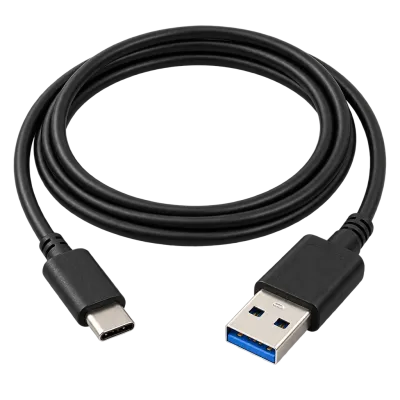
USB-A is the rectangular connector that most people picture when they hear the word USB. It was part of the original USB 1.0 specification from the mid 1990s and has appeared on almost every computer since. The connector only fits one way, so it needs a look before plugging in, unlike the reversible USB-C.
USB-A ports are usually found on the host side of a connection: on laptops, desktop computers, wall chargers, car adapters, hubs and docks. The cable's other end typically carries a different connector, such as USB-B, micro-USB or USB-C, matching the accessory. USB-A supports everything from the slow Full Speed and High Speed tiers up to SuperSpeed at 5, 10 or 20 Gbit/s, depending on the exact port and cable.
Even as USB-C becomes the standard connector for phones and many other devices, USB-A remains common on desktop computers, monitors and travel adapters, mainly for backward compatibility with the huge number of existing cables and accessories. See our overview of USB connectors and the entry on USB-C for how the two compare.