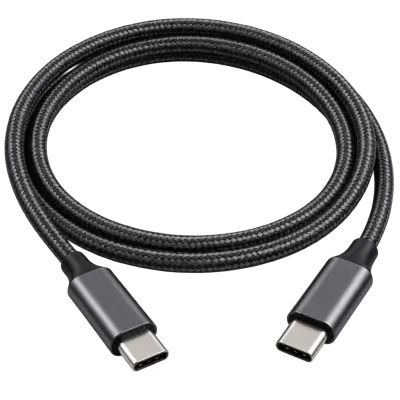
USB-C is the small, oval shaped, reversible connector introduced in 2014. Unlike USB-A, it can be plugged in either way round, which removes the guesswork of earlier connectors. On its own, the shape says nothing about speed or power, since USB-C is a connector standard that different generations of USB and other protocols all use.
Behind a USB-C port there can be USB 2.0, USB 3.2 at 5, 10 or 20 Gbit/s, or USB4 at up to 80 Gbit/s. The same port can also carry Power Delivery for charging, up to 240 W with Extended Power Range, and video through Alternate Mode for DisplayPort or HDMI. That flexibility is why the connector is now used for phones, laptops, tablets, headphones and many accessories.
Because one plug shape hides very different capabilities, it is worth checking a device's actual specification rather than assuming from the connector alone. Our USB-C guide goes through this in detail, and USB-C charging covers what to expect when powering devices through it.