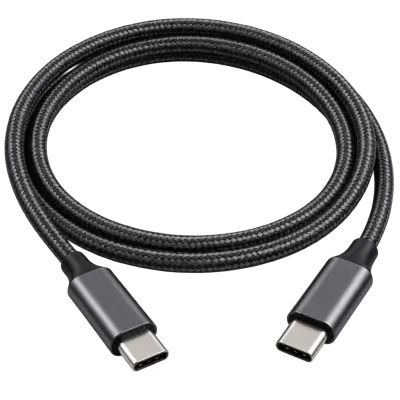
USB4 is the newest generation of the USB standard, using the USB-C connector exclusively. It builds on Thunderbolt 3 technology and supports data rates of 20 or 40 Gbit/s, while the newer USB4 Version 2.0 raises this to 80 Gbit/s, with up to 120 Gbit/s available asymmetrically for demanding video use.
Beyond raw speed, USB4 can tunnel other protocols, such as DisplayPort and PCI Express, over the same connection, letting one cable carry data, video and, in many cases, power at the same time. This is what makes a single USB-C cable able to drive a monitor, charge a laptop and transfer files simultaneously.
Not every USB-C port supports USB4, and implementations vary in which optional features, like external graphics or full 40 Gbit/s speed, are actually included. Reading the exact speed marking, such as USB 40Gbps, next to a port is the reliable way to know what it supports. See USB speeds explained and our USB4 and Thunderbolt guide for more.