
6 min read
The EU Common Charger Rules Explained for Buyers
A plain-language look at the EU common charger rules, their general timeline, and what the shift to USB-C means for buyers and travellers everywhere.
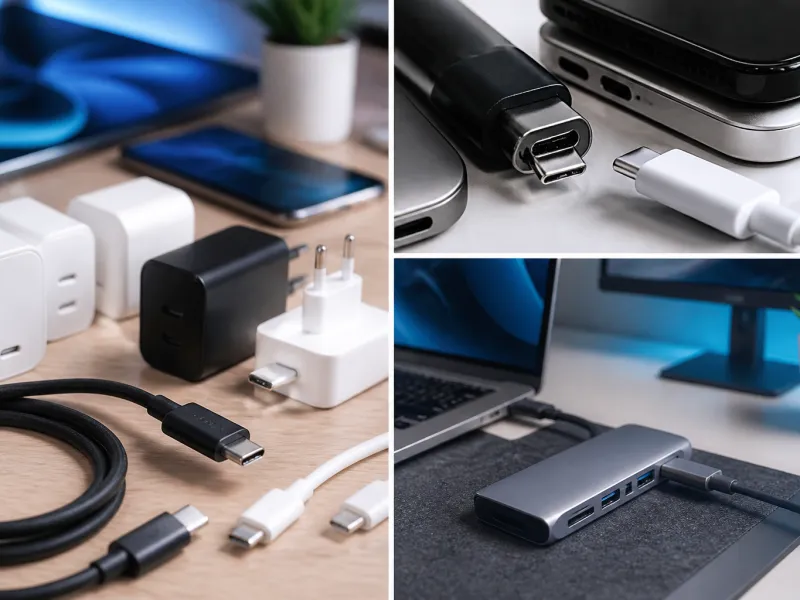
For years, buying a new phone often meant buying a new charger to go with it, since manufacturers used different connectors and sometimes different charging behaviour from one model to the next. The European Union introduced common charger rules to address this, aiming for a single connector standard across a wide range of portable electronics sold within the EU.
This guide explains what the rules generally cover, the timeline as it is currently understood, and what it means for buyers, including those outside the EU. Because rules like these can be updated or clarified over time, always check current official EU sources for the exact legal text and latest status before relying on specific details for a purchase or business decision.
01
What the rules are intended to cover
The common charger rules are generally understood to require USB-C as the standard charging port on a broad range of small and medium sized electronic devices sold in the EU, including phones, tablets, cameras, headphones, and similar portable electronics. The aim is to let one cable and one charger work across devices from different manufacturers, reducing the number of chargers people need to own and carry.
Devices that charge wirelessly only, or that are too small or specialised to reasonably include a standard port, are generally treated differently under the rules, so it is worth checking a specific device's own documentation rather than assuming every category of electronics is covered in exactly the same way.
The broader intention behind the rules is often described in terms of reducing electronic waste and consumer inconvenience, since a household accumulating several different charger types over the years is a familiar experience for many people. A single common connector standard is intended to reduce both the number of chargers manufactured and the number that end up discarded when a device is replaced.
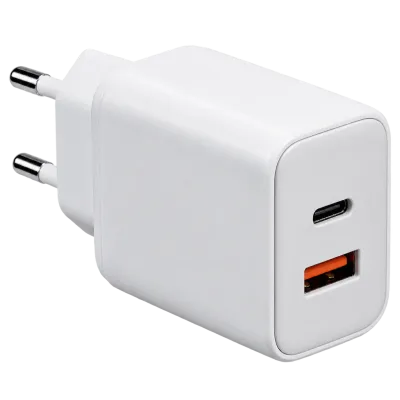 Matching productGaN charger 65 WAmazon →
02
Timeline in general terms
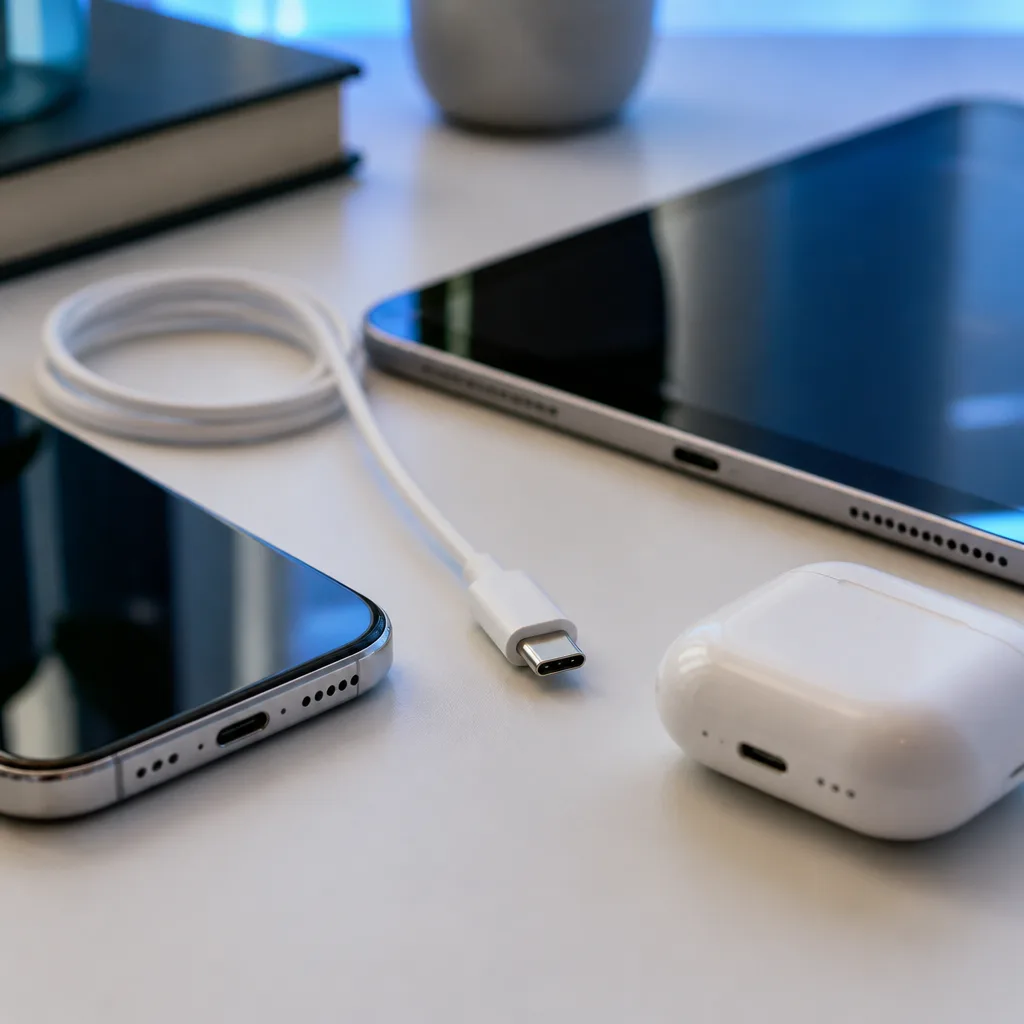
Based on the timeline generally understood for these rules, most of the covered smaller devices, such as phones, tablets, and similar electronics, needed to comply from the end of 2024 onward. Laptops were given a longer adjustment period, with compliance generally expected from around April 2026, reflecting the more complex engineering involved in laptop charging compared with smaller devices.
| Device category | General timeline |
|---|---|
| Phones, tablets, cameras, headphones and similar small electronics | Compliance generally expected from end of 2024 |
| Laptops | Compliance generally expected from around April 2026 |
These dates describe the general shape of the rules as widely reported and understood. For a specific product, a business decision, or a legal question, checking the current official EU documentation directly is the reliable way to confirm exact scope and dates, since details can be clarified or updated over time.
Manufacturers generally need lead time to update product designs, so it is common to see the shift towards a required connector happening gradually within an industry, with many products already meeting a future requirement well before its formal deadline arrives. This is part of why USB-C had already become common on many devices even before compliance dates applied.
03
Fast charging and Power Delivery
Alongside the common connector, the rules are also generally understood to touch on charging communication, encouraging devices that support fast charging to do so using the standard USB Power Delivery protocol, rather than a manufacturer specific fast charging system that only works with that brand's own charger. This is intended to make fast charging genuinely interoperable between different brands of chargers and devices, not just the physical connector shape. Our guide to choosing a USB charger explains how Power Delivery negotiation works in more everyday terms.
04
Unbundled chargers
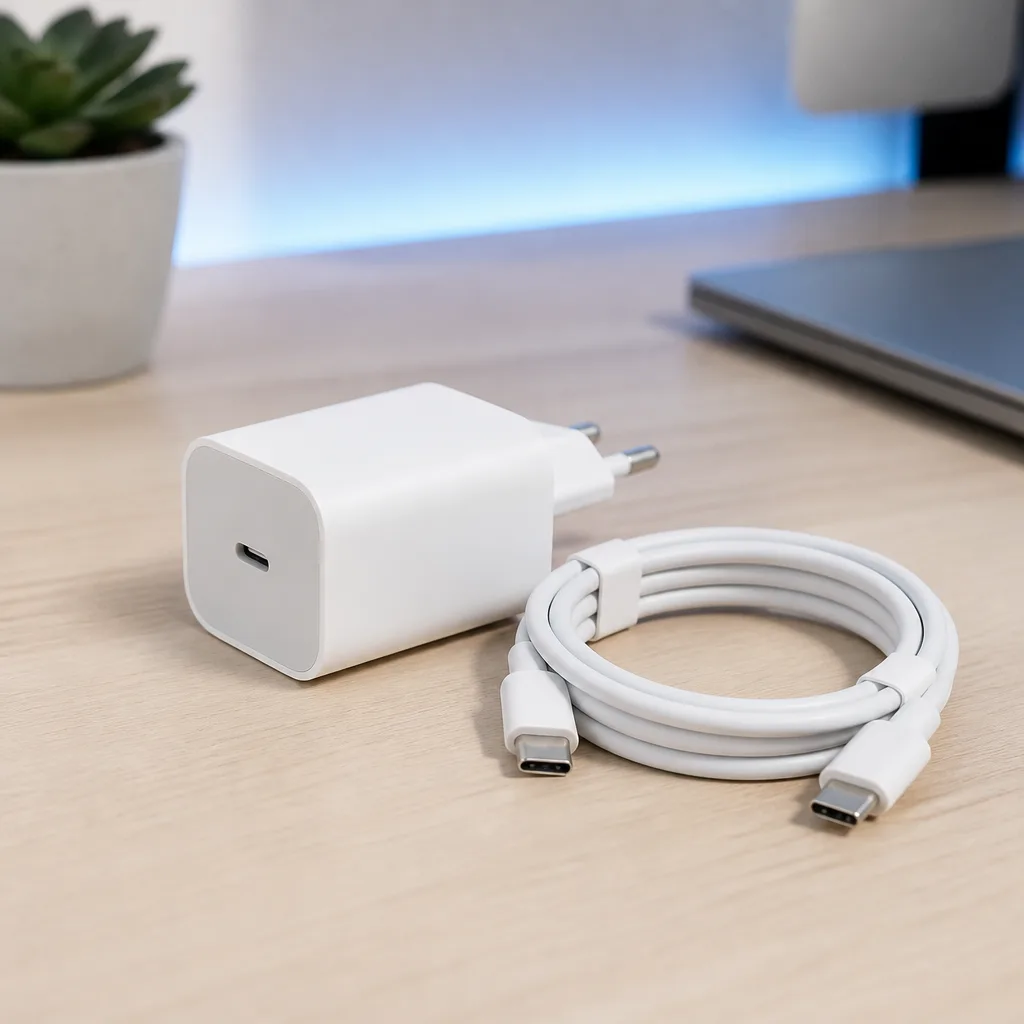
Separately from the connector rules, many manufacturers have already moved towards selling phones and other small devices without a charger included in the box, a change generally described as unbundling. The stated aim behind this shift is to reduce the number of chargers produced and discarded overall, given how many people already own at least one compatible charger from a previous device.
This means it is increasingly common to need to check, and possibly buy separately, whether a new device comes with a charger at all, rather than assuming one is automatically included as it may have been in the past. Our buying guide covers what to check for when a charger is not included with a new device.
05
What it means for buyers outside the EU
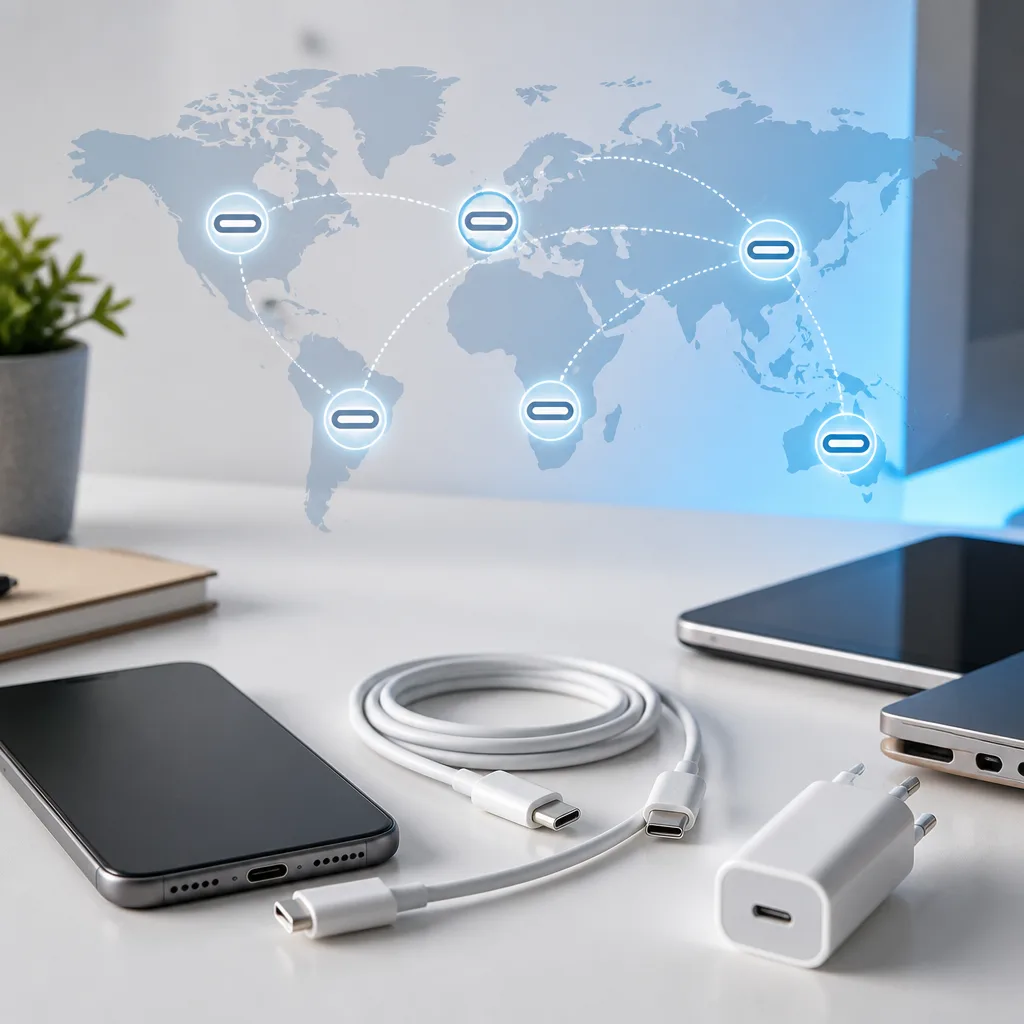
Because large manufacturers generally sell similar hardware across many markets, EU rules on charging ports have had a noticeable influence on devices sold well beyond the EU itself, as manufacturers often standardise their designs globally rather than building region specific variants. This means shoppers outside the EU frequently benefit from the same USB-C standardisation, even where it is not a direct legal requirement in their own country.
That said, rules and their exact scope can differ by region, and a device bought in one part of the world is not guaranteed to follow the same requirements as one bought in the EU. Checking the specific device's own specifications remains the most reliable approach, particularly for buyers who frequently purchase electronics across different regions.
06
What it means for travellers
For travellers, the broader shift towards USB-C means it is increasingly likely that a single cable and charger can serve a phone, a tablet, headphones, and potentially a laptop, cutting down on the number of chargers needed in a travel bag. This is a practical, everyday benefit of standardisation that travellers can notice directly, separate from the underlying legal detail of which specific rule applies where.
Our guide to charging laptops over USB-C and our charger buying guide can help with planning a simplified, USB-C focused travel kit that covers most common devices with fewer separate chargers than in the past.
Airports and hotels have also gradually adjusted to this shift, with USB-C charging points becoming more common alongside older USB-A style options in many public charging points. This is a convenient side effect of standardisation for anyone travelling with modern devices, even though public charging infrastructure itself sits outside the scope of the rules described here.
 Matching productUSB-C to USB-A cableAmazon →
07
Practical takeaways for shoppers
For most everyday shoppers, the practical effect of these rules is simpler than the legal detail behind them: newer phones, tablets, and a widening range of other small electronics increasingly share the same USB-C connector, and over time this is expected to extend to laptops as well. Rather than tracking every legal date, checking a specific device's own listed port and included accessories at the time of purchase remains the most direct way to know what you are getting.
08
Frequently asked questions
Does this mean every electronic device now must use USB-C?
The rules are generally understood to apply to a defined list of device categories rather than absolutely everything, and some devices are treated differently. Checking current official EU sources is the reliable way to confirm whether a specific category is covered.
Can I still use my old charger with a new USB-C device?
If your old charger has a USB-C connector and provides suitable power, it will often still work, though checking wattage compatibility as described in our charger guide is worthwhile.
Why did laptops get a later deadline than phones?
Laptop charging generally involves higher power levels and more varied engineering requirements than small devices, which is generally understood to be why laptops were given more time to adjust.
Do these rules apply to chargers bought outside the EU?
The rules are specific to devices placed on the EU market. Products sold elsewhere may or may not follow the same requirements, depending on local rules in that region.
Explore
Read next
 USB Standards and Speeds Explained: USB 1.0 to USB4 Version 2.0A complete overview of USB versions and speeds, from USB 1.0 to USB4 Version 2.0, including the confusing renaming of USB 3.x.
 USB Connector Types Explained: Type-A to USB-CA guide to every USB connector type, from Type-A and Micro-USB to USB-C, which devices use which, and how adapters bridge between them.
 How USB-C Charging Works: Power Delivery, PPS and EPR ExplainedA clear explanation of USB-C charging: Power Delivery negotiation, PPS, Extended Power Range, cable current limits, and common reasons for …