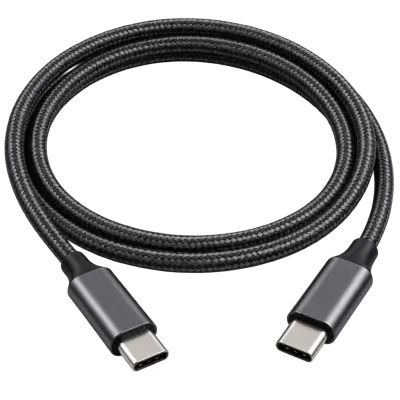
An active cable is a USB or Thunderbolt cable that contains electronic components inside its connectors, typically a retimer chip, that regenerate the signal as it travels along the cable. This is different from a simple passive cable, which has no such electronics.
Active cables are needed to maintain high data speeds, such as USB4 at 40 or 80 Gbit/s, over longer lengths than a passive cable could reliably support, since signal quality naturally degrades over distance at very high speeds. They tend to cost more than passive cables of the same length because of the added electronics.
Active cables usually carry an e-marker chip and are clearly marketed with their supported speed, and checking this rating against a device's needs is important, since not every active cable supports the same maximum data rate or power level. See our guide to USB cables for more.